


Since the old days of football video games seeing pixelated players on voxel fields to photorealistic stadiums where fans are shouting, the history of the West Ham United team in the games shows the development of the industry in a very similar manner.
The portrayal of ‘the Hammers’ has certainly gone through a major change compared to the golden ages of football video gaming, consequently providing people across the globe the opportunity to lead their East London favorites towards digital success.
The Early Days: Pixels and Potential
As the first-ever football games emerged both in the 1980s and early 1990s, the popularity that West Ham presented was relatively low. The team’s iconic claret and blue kit may still be familiar today, but player likenesses at that time were practically non-existent and the only differences between the teams were the symbology and generic stats. Contrary to what we have today, the games back then just had the essence of the sport with no extra frills, still enjoyable but no modern touch like an online casino now has.
I can still clearly remember those old games where the gap between blocky sprites and the superstars they were supposed to represent was fueled by only imagination. Alongside other digital entertainment industries, this was the era in which the gaming industry was rounding the corner the most.
New games were being developed to depict football in a more authentic way. The limited technology enabled West Ham players to be just like those of other clubs. The revolutions happening in other technological sectors were paving the way for this as well, and later, those were the same ideas that were revolutionized in sports gaming.
FIFA’s Rise and West Ham’s Digital Identity
The latter half of the decade of the 90s was the beginning of an era for the FIFA series developed by EA Sports, and it was this game that became the ultimate football gaming experience. Year by year, West Ham’s appearance in these games became more and more lifelike and detailed.
In the 1998/99 season, when Paolo Di Canio was with the Hammers, the FIFA games started reaching a point where they were able to show player faces and attributes which were quite similar to the real world and even these.
Before FIFA 2005, West Ham players featured physical traits that were somewhat unique, but their characters were not quite as life-like as those of the modern era. The team’s elevation to the Premier League in the given year served as a catalyst for the club’s improvement as they started being represented in a more detailed manner online, Upton Park being an example in the next installments.
The Ultimate Team Era
The introduction of FIFA Ultimate Team by the game’s developers in 2009 not only raised the interaction of the gamers with clubs like West Ham, but at the same time they made the gamers the focus of the scene of collecting cards and developing custom teams. West Darby players who had an exceptional season would receive special cards, making them even more desirable to other youngsters.
One spectacular season of Dimitri Payet in 2015/16, for example, was the reason he benefited from multiple special cards whose possession made him a player that everyone wanted to have in his/her squad. The mode’s focus on player ratings was also the reason why debates among fans were a common thing.
Was Mark Noble’s passing ability given a realistic rate? Did Michail Antonio’s explosiveness get the credit it deserved? These talks were a part of the greater football culture, thus showing the blurring lines between virtual and actual performances.
The London Stadium Transition
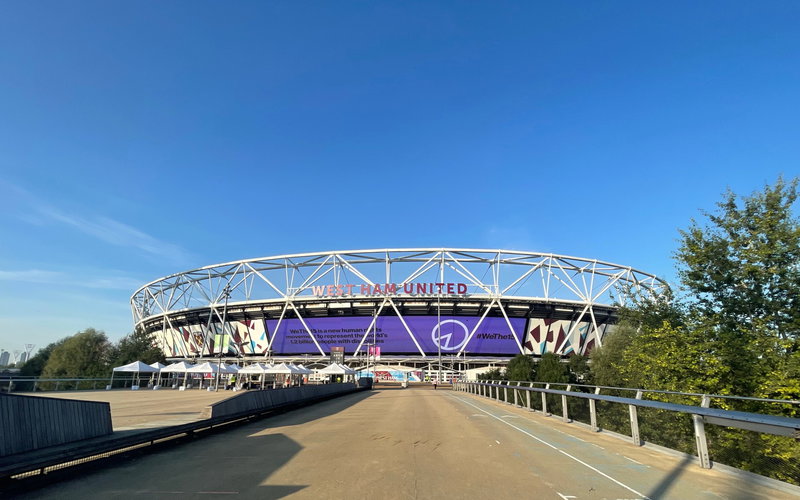
The move of West Ham from Upton Park to the London Stadium in 2016 was a peculiar case for game developers. Both venues were presented in FIFA 17, reflecting the 2016-2017 season’s transition period of the actual club.
The representation of the new 60,000-capacity stadium not only indicated the enhanced graphical capabilities achieved thanks to the latest gaming consoles, but also the ambient lighting and the available crowd animations made gaming all the more enjoyable.
This time was, amongst other successes, the era when EA’s Frostbite engine got launched, thus, it was the start of the next level in detailing player likenesses. From Declan Rice’s fierce expression as he was recovering the ball in midfield to Jarrod Bowen’s celebration after scoring a decisive goal…
Beyond FIFA: West Ham in Other Football Games
Though FIFA has the broadest coverage, other games have taken a more alternate approach to West Ham’s digital venture. The Pro Evolution Soccer (now eFootball) series by Konami may not have had official licenses, but they made up for them in gameplay.
Still bearing the trademark claret and blue colors, the name might have shifted to Fork “London FC” or “East London”. Football Manager arguably offers the most comprehensive simulation of being the Hammers manager, complete with strikingly realistic limits such as detailed youth academy vision.
The Future: Hyperrealism and Beyond
In contemporary video games, West Ham now features West Ham faces, realistic tattoos, personalized sprinting styles, individual goal celebrations, and much more. The London Stadium is full of life with realistic crowd chants and responses to the ongoing events of the match.
With the next generation of gaming comes better motion capture, dynamic AI actions, and perhaps VR. The distinction between ‘playing’ and ‘watching’ West Ham matches is becoming less defined.
In Closing
The evolution of West Ham in football video games reflects not just technological advancement but also the growing global reach of both the Premier League and gaming culture.
From simple sprites to dynamic 3D models, the Hammers’ journey through gaming history offers a fascinating lens through which to view how far interactive entertainment has come.
For fans, these virtual representations provide a way to express their passion, whether recreating famous victories or rewriting history by leading West Ham to digital Champions League glory.
Image Source: unsplash.com