

Daniel Křetínský
By Kris Gonzo | Senior West Ham Columnist (Follow on X)
Daniel Křetínský is one of the most important figures in West Ham United’s modern ownership story.
To many supporters, he represents the possibility of a different future after years of frustration with the previous regime. Not certainty. Not instant success. But opportunity.
Křetínský first invested in West Ham United in November 2021, when his investment vehicle, 1890 Holdings, bought a 27 per cent stake in the club. For several years after that, he remained largely in the background while David Sullivan continued to be viewed as the dominant figure at West Ham.
That is an important part of the story. Křetínský was not a complete outsider arriving after the damage was done. He was already part of the ownership structure during some hugely significant years, including the Europa Conference League triumph, the club’s later decline and eventual relegation.
Supporters are entitled to remember that. However, there is also a strong belief that Křetínský may only now have the authority to properly shape the club’s future.
That is why his increased influence matters. West Ham fans are not judging him by his reputation in energy, retail or logistics. They want to know what he will do for West Ham United.
At a Glance
| Full name | Daniel Křetínský |
| Born | 9 July 1975 |
| Nationality | Czech |
| Occupation | Businessman, lawyer and investor |
| West Ham involvement | Investor since November 2021 |
| Initial West Ham stake | 27 per cent |
| Ownership vehicle | 1890 Holdings |
| Known for | EP Group, EPH and long-term investment strategy |
Who is Daniel Křetínský?
Daniel Křetínský is a Czech businessman, investor and qualified lawyer who built his fortune through energy, infrastructure, retail, logistics, media and sport.
He is often referred to in the business press as the “Czech Sphinx”, a nickname earned because of his private nature and his reluctance to reveal too much publicly.
That description also fits the way many West Ham supporters first experienced him. He was present, wealthy and clearly significant, but difficult to read.
Unlike some football owners, Křetínský has not tried to become the public face of the club. He does not regularly appear in interviews, make emotional speeches or involve himself publicly in every football decision.
That quiet style can be both reassuring and frustrating. West Ham supporters have wanted better communication from the club for years, so another low-profile owner was never going to win automatic trust.
But Křetínský’s appeal is not based on personality. It is based on what he may be able to deliver.
Business background
Křetínský was born in Brno, in what was then Czechoslovakia, on 9 July 1975. He studied law before moving into corporate finance and investment.
His business career developed through J&T Finance Group before he became closely associated with Energetický a průmyslový holding, better known as EPH.
EPH became one of the major privately owned energy groups in Europe, with interests in power generation, energy infrastructure and related assets across several countries.
Energy is not a glamorous industry, but it helps explain Křetínský’s style. It is a sector built on infrastructure, regulation, patience and long-term planning. Those are not the habits of a short-term gambler.
His wider investments have included major interests in Royal Mail’s parent company, Sainsbury’s, Foot Locker, Casino, Metro and other European retail and media assets.
Those business interests have attracted plenty of attention and criticism elsewhere, but most West Ham supporters are unlikely to judge him on Royal Mail, Sainsbury’s or any other company. Football fans tend to be more direct than that.
They care about what he does for their club.
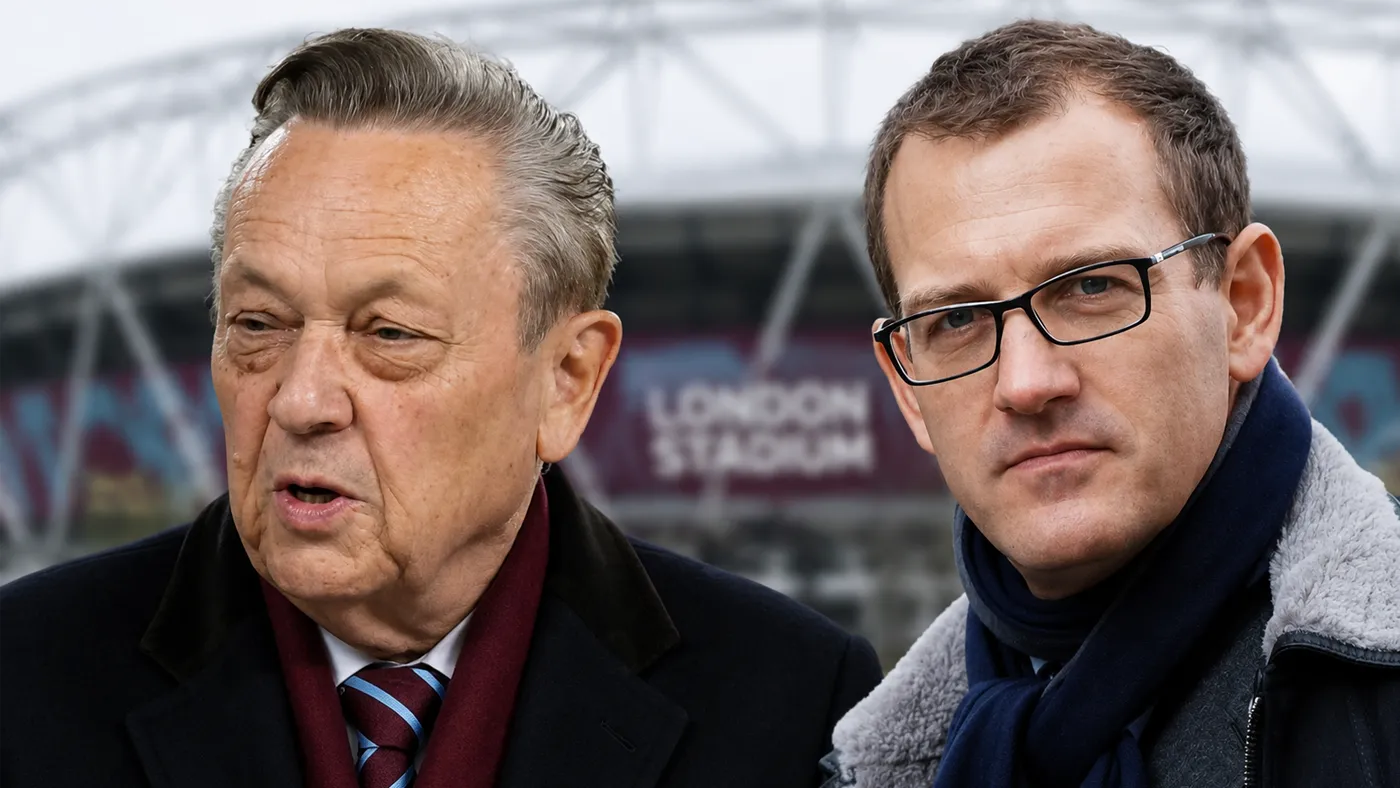
Sullivan and Kretinsky
Why West Ham supporters care
West Ham supporters care about Daniel Křetínský because he represents the first credible alternative to David Sullivan’s leadership in many years.
That does not mean he is automatically trusted. It means he has an opportunity.
For many fans, the Sullivan era became associated with poor communication, strained supporter relations, frustration over the London Stadium, underwhelming infrastructure and a feeling that West Ham lacked the ambition to become the club it should be.
The Europa Conference League win in 2023 will always be part of that period too, and it should never be ignored. It was one of the greatest nights in the club’s modern history.
But a European trophy did not remove wider concerns about how West Ham were run.
Křetínský now has to show that he can offer something different. Supporters will not be impressed by wealth alone. They want better decisions, better planning and a club that feels more serious about its future.
The David Sullivan contrast
It is impossible to tell Křetínský’s West Ham story without mentioning David Sullivan.
Sullivan, alongside the late David Gold, took control of West Ham in 2010. His time at the club included survival, European football, the move from Upton Park and the Europa Conference League triumph.
However, his ownership also became increasingly divisive.
For many supporters, the move from the Boleyn Ground to London Stadium remains the defining issue. Fans were promised growth, ambition and a stadium fit for a bigger future. Instead, many felt the club lost part of its identity and inherited a venue that has never fully felt like home.
The badge change, with “London” added beneath the crossed hammers, became another symbol of that period. To many fans, it felt more like a branding exercise than a football decision.
That is why even small changes under Křetínský matter. A proper crest consultation, better supporter engagement and reduced season ticket prices after relegation all suggest a different tone.
Those steps do not solve everything. But they do indicate that the club may finally understand the importance of rebuilding trust.
Why fans are cautiously optimistic
The mood around Daniel Křetínský is best described as cautious optimism.
There is hope because he has the resources and business background to modernise West Ham. There is caution because supporters have been promised plenty before.
Early signs have encouraged many fans. The reduction in season ticket prices following relegation was welcomed. So was the willingness to consult supporters over the club crest.
There is also a belief that Křetínský has more ambition than Sullivan and greater financial strength to support that ambition.
For supporters, the biggest questions are simple. Can he keep key players? Can he fund a proper rebuild? Can he improve the training ground? Can he reset the relationship with the London Stadium? Can he return West Ham to the Premier League quickly?
That is what matters.
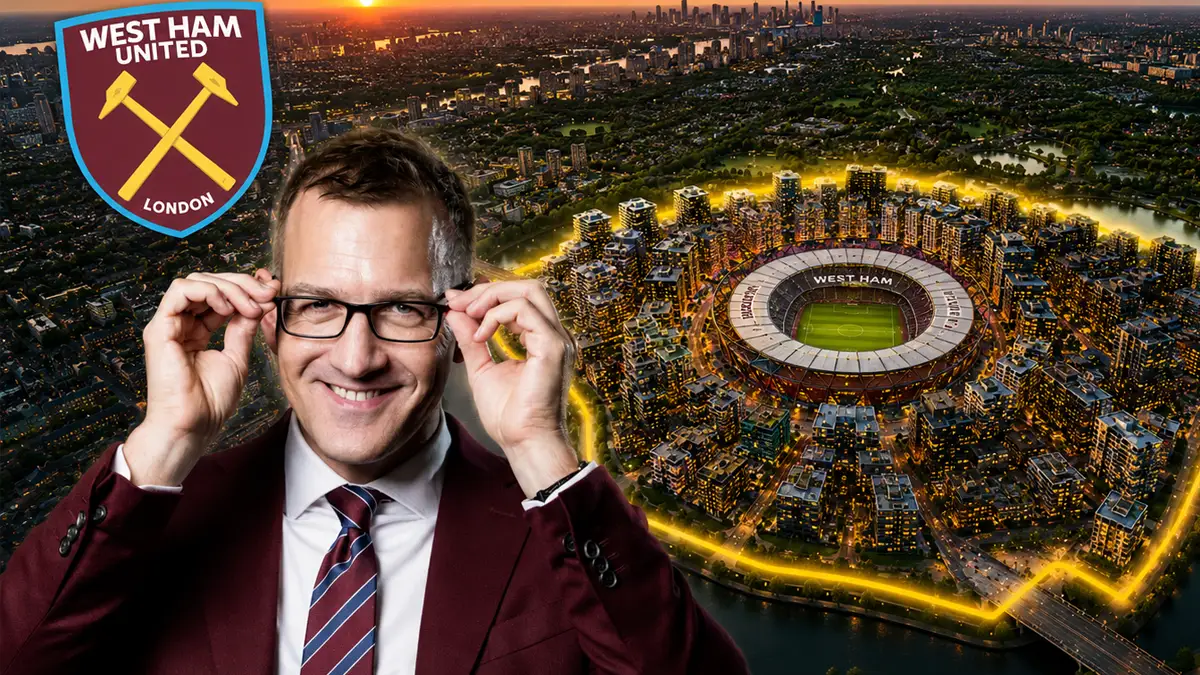
Daniel Kretisnky has big plans to revamp the London Stadium
The London Stadium challenge
No West Ham owner can ignore the London Stadium.
The move from Upton Park remains one of the most emotional and controversial decisions in the club’s history. Many supporters still feel the club gave up its home without receiving the football stadium it was promised.
The seats are too far from the pitch. The atmosphere has often been difficult to generate. The matchday experience has not always matched the scale of the support.
The relationship between West Ham, the stadium operators, the London Legacy Development Corporation and the wider political structure around the venue has also been difficult.
One of the hopes around Křetínský is that he may be able to improve those relationships.
A less confrontational and more strategic approach could make a difference. Supporters will want to see whether that leads to practical improvements, whether through better seating arrangements, improved facilities, a stronger matchday atmosphere or a more ambitious long-term plan.
It will not be simple. The stadium is legally, politically and financially complicated.
But if Křetínský wants to reshape West Ham, the London Stadium issue cannot be ignored.
The training ground issue
The training ground is another major test.
For a club with West Ham’s size, history and potential, the training facilities have too often felt below the level required.
Modern football is not just about transfer fees. Clubs compete through recruitment, data, analysis, medical departments, nutrition, sports science, academy development and elite facilities.
West Ham have too often looked behind the curve.
There is hope that Křetínský will help drive a proper infrastructure plan, potentially consolidating the club’s fragmented training setup into one serious modern complex.
That would not create the same excitement as a major signing, but it could be more important over the long term.
A proper training base would help attract players, support managers, improve academy development and show that West Ham are serious about becoming a modern football club.
What must change under Křetínský?
The challenge for Křetínský is not simply to spend money.
West Ham need a better football structure. They need smarter recruitment, clearer communication, stronger infrastructure and a more serious long-term strategy.
They also need to reconnect with supporters.
That means understanding that West Ham is not just a business, a brand or a stadium tenancy. It is a football club with history, emotion and identity.
Supporters want ambition, but they also want authenticity.
If Křetínský can combine serious investment with a genuine understanding of what West Ham means to its supporters, he will earn trust quickly.
If he cannot, he will eventually be judged in the same way as those before him.
Gonzo’s View
For me, Daniel Křetínský starts from an unusual position.
Most new football owners arrive either with enormous excitement or huge scepticism surrounding them.
Křetínský has inherited something slightly different.
He has inherited goodwill.
Not because supporters necessarily know a great deal about him, but because he represents a break from the previous regime.
After almost sixteen years under David Sullivan, many West Ham supporters simply wanted a different direction.
That’s not to ignore what Sullivan achieved.
He oversaw the Europa Conference League triumph, one of the greatest nights in West Ham’s history, and that should always be recognised.
Equally, by the end of his time running the club, many supporters felt West Ham had become stale.
The football operation appeared reactive rather than proactive.
The recruitment strategy often lacked consistency.
The training ground failed to keep pace with many rival clubs.
The relationship with supporters had deteriorated.
And perhaps most importantly, the move to London Stadium never delivered everything supporters had been promised.
That is the football club Daniel Křetínský has inherited.
Personally, I think one of the biggest positives is that he appears to understand modern football is no longer simply about buying players.
Football has become a billionaire’s game rather than a millionaire’s game.
Transfer fees matter, but so do data analysis, recruitment structures, academy development, sports science and elite facilities.
If Křetínský genuinely delivers a modern recruitment department, improves West Ham’s fragmented training facilities and builds a stronger relationship with the London Stadium, he could leave a far bigger legacy than simply signing one expensive striker.
That said, I also think supporters should be careful not to judge him too quickly.
He deserves credit for promising change, but promises alone are never enough.
In my opinion, Daniel Křetínský should only really be judged after two transfer windows.
By then, he will have had the opportunity to shape the football department, implement his recruitment structure, retain the players he wants to keep and begin delivering the infrastructure improvements he has spoken about.
If, by that point, West Ham have returned to the Premier League, strengthened the club behind the scenes and genuinely look better organised than they did before, I suspect supporters will quickly embrace him.
If not, he’ll be judged just as firmly as every owner before him.
For now, however, I think cautious optimism is exactly the right approach.
Conclusion
Daniel Křetínský’s story at West Ham United is still being written.
His business achievements are already well established, but football ownership is judged differently.
Supporters care less about balance sheets than they do about ambition, identity and whether their football club is moving in the right direction.
For many years, West Ham supporters have argued that the club possessed all the ingredients to compete at a higher level but lacked the long-term structure needed to fulfil that potential.
Křetínský now has the opportunity to change that.
He has the financial resources to invest.
He appears to favour a modern football structure.
He has spoken about improving infrastructure.
And perhaps most importantly, he has inherited a supporter base prepared to give him the benefit of the doubt.
That goodwill is valuable, but it will not last forever.
Ultimately, Daniel Křetínský will not be remembered because he became West Ham’s largest shareholder.
He will be remembered for what he does next.
This page is reviewed and updated as significant developments occur in Daniel Křetínský’s involvement with West Ham United.