



For years, football’s “Big Five” leagues have been considered untouchable: the Premier League, La Liga, Bundesliga, Serie A and Ligue 1.
But could the EFL Championship now have a stronger claim to being among Europe’s biggest leagues?
So far this season, Championship clubs have attracted a combined crowd of 3,044,652 supporters, averaging 23,066 spectators per game across the division.
Leading the way are West Ham United, whose relegation to the Championship has seen the London Stadium continue to fill up week after week. The Hammers are currently averaging an impressive 60,882 supporters per match, a figure many of Europe’s top-flight clubs can only dream of.
And it is not just West Ham drawing huge crowds.
Wolves are averaging 30,737, while Middlesbrough have 30,133 and Southampton are attracting 29,176 supporters per game. Derby County are close behind on 27,751, with Sheffield United averaging 26,639, Cardiff City 26,229 and Birmingham City 26,146.
Those are attendance figures that compare favourably with many clubs competing in Europe’s leading divisions.
What makes the argument even more compelling is that this is not simply a one-season phenomenon.
The Championship welcomed a record-breaking 12.7 million supporters during the 2023/24 campaign, with the English Football League confirming it was the second most-attended league competition in Europe, behind only the Premier League and ahead of divisions such as the Bundesliga, La Liga and Serie A.
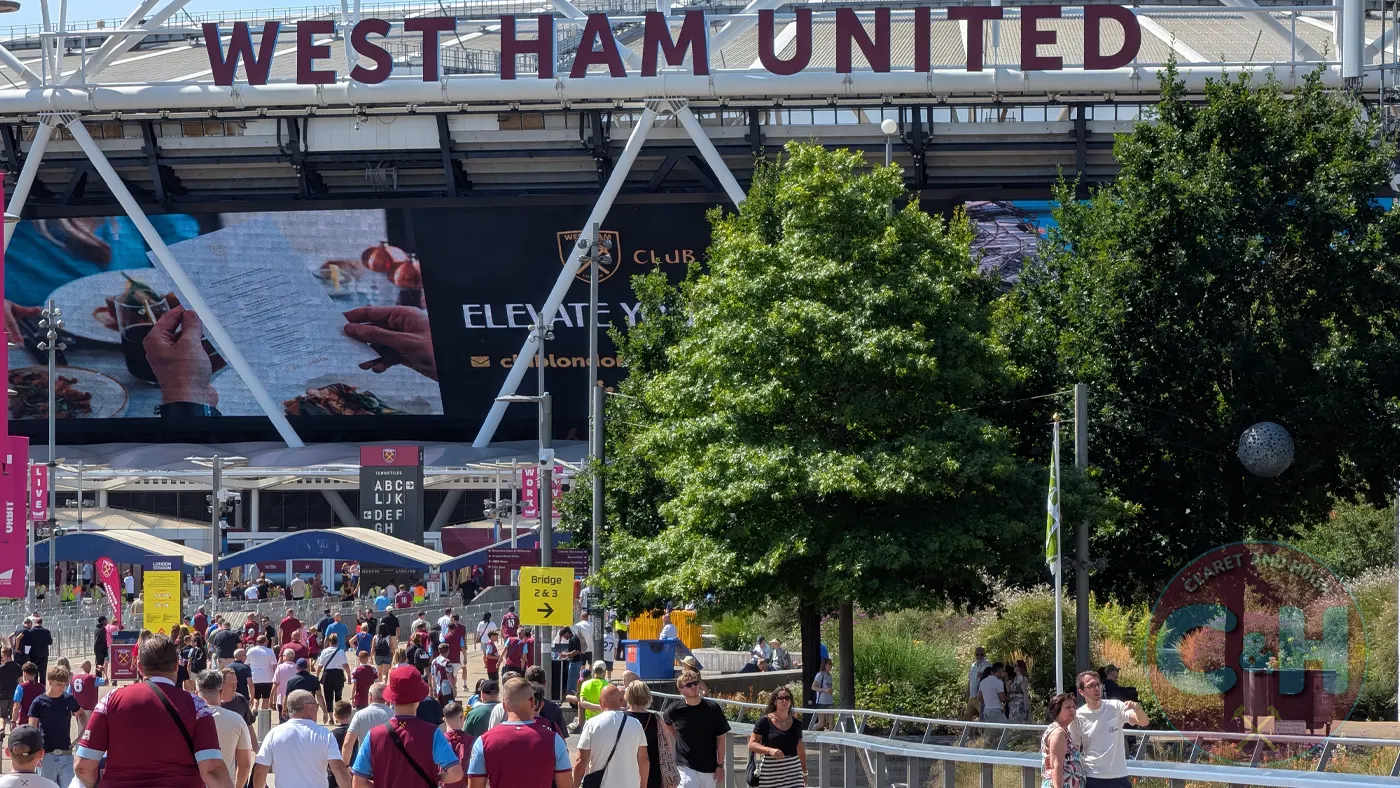
The London Stadium is breaking attendance records
The Championship’s Financial Contradiction
Yet beneath the packed stadiums and vibrant atmospheres lies a financial reality that paints a very different picture.
For all its popularity, the Championship remains one of the most financially challenging leagues in world football. Despite attracting crowds that many top-flight divisions would envy, only four clubs reported a profit during the 2023/24 season, and those profits were achieved primarily through player sales rather than sustainable day-to-day football operations.
The reason is simple: the prize for promotion is so lucrative that clubs continue to spend heavily in pursuit of a place in the Premier League. The financial rewards of reaching the top flight, including broadcast revenue, commercial growth and increased sponsorship opportunities, have created an environment where many owners are willing to accept significant short-term losses in exchange for the chance of long-term gain.
The scale of those losses is remarkable. A BBC report published earlier this year claimed Championship clubs had collectively lost more than £3 billion over the previous decade. More recently, football finance expert Kieran Maguire revealed that seven Championship clubs alone reported combined losses of £169 million during the 2024/25 financial year, despite one of those clubs ultimately securing promotion to the Premier League the following season.
It highlights one of football’s greatest contradictions. The Championship is a competition capable of filling stadiums, generating television audiences and creating atmospheres that rival many of Europe’s leading divisions, yet financially it remains heavily dependent on owner investment and the dream of promotion, with the former option now limited due to Squad Cost Ratio (SCR).
Nobody is suggesting the Championship can yet match Europe’s elite leagues for playing quality, global television reach or international star power. However, when judged on attendances, atmosphere, historic clubs and overall scale, the Championship has grown into something far bigger than a traditional second division.
Why West Ham Still Need Premier League Football
I know many West Ham supporters are understandably enjoying the season so far, myself included. The club’s position in the automatic promotion places, combined with a renewed sense of expectation rather than underdog status, has created a positive atmosphere around the London Stadium. The absence of VAR has also been widely welcomed.
However, beyond the impressive attendances and feel-good factor lies a stark reality. Promotion remains the overriding objective. While life in the Championship may be proving enjoyable, the financial rewards of the Premier League are simply too significant to ignore. For a club of West Ham’s size and ambition, a return to England’s top flight is not just desirable; it is essential.
The Championship may offer a more authentic football experience, but the promised land of the Premier League remains where clubs generate the revenues needed to compete and thrive in the modern game.