


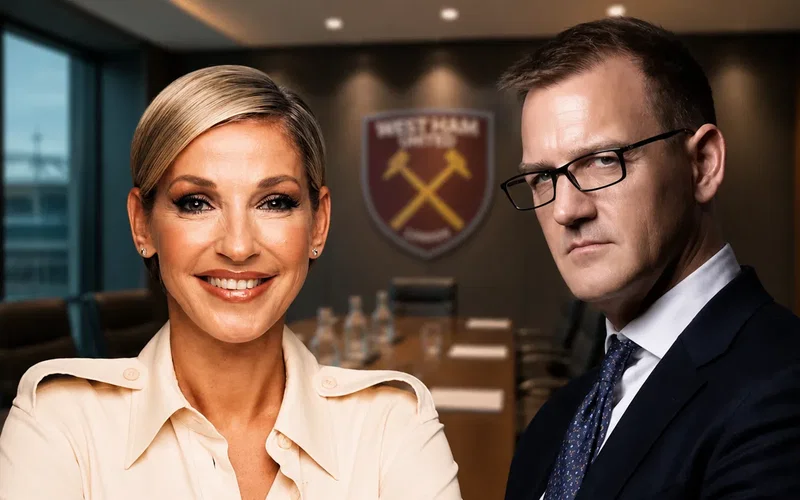
West Ham United employ, according to the club’s own linked‑in profile, around 300 core staff and a further 500 Foundation and events staff. These numbers fluctuate season by season, but the reality of relegation has already begun to bite. Behind the headline‑grabbing transfer exits and boardroom manoeuvres, the club has quietly entered a period of painful internal restructuring and people are losing their jobs.
One of the more visible and upsetting departures is Russ Budden, the club’s matchday DJ for 25 years. Russ confirmed on social media:
“I’ve been informed that my role is no longer viable due to cost‑cutting. I’m no longer the West Ham match DJ – and I’m gutted. I won’t lie, I cried when I was told.”
West Ham were already carrying £104m of debt, with turnover falling £42m year‑on‑year even before relegation.
Relegation is estimated to have caused a 50–60% collapse in revenue, wiping out tens of millions in broadcast income, commercial deals, and matchday earnings.
The club has however brought in substantial income from the sale of two key players Mateus Fernandes and Crysencio Summerville.
Together, their departures have raised approximately £145m, a figure that places West Ham among the top net‑sales clubs globally this summer.
It was widely suggested that co‑owner Daniel Křetínský would inject £90m into the club as a shareholder loan once he completed the purchase of 16% of Vanessa Gold’s shares, taking his ownership stake to around 42%. Yet that has been complicated by yesterday’s news suggesting that Amanda Staveley and a consortium are looking to acquire the entire 25% of Gold’s shares.
This explains that whilst Kretinsy’s intentions were announced some time ago, to date there has been no update on Companies House or an official statement. It was therefore a promised lifeline, not a guaranteed one.
It should also be noted that the club do receive parachute payments, and given they had been in the Premier League for more than three seasons qualify for around £107m, of which £50m is paid in year one, yet this is cancelled if the club gains promotion within the three years.
The payment sadly doesn’t cover all the losses such as £40m lost TV revenue, £15m–£20m lost commercial revenue and reduced matchday income. Parachute payments soften the blow, they do not erase it.
There are two silver linings, 50,000 season ticket sales will help stabilise match day revenue. While, reduced London Stadium rent has fallen from £4.4m to around £2.2m which should help ease operational costs.
West Ham were ranked 20th globally in the 2026 Deloitte Money League, one of nine Premier League clubs in the top 20. That status is now gone and consigned to history.
For many West Ham fans, myself included all the uncertainty at boardroom level has only increased frustration going into the new season, and it is hoped that a conclusion will be reached in the near future.