


For West Ham United fans, matchday has never been confined to the 90 minutes on the pitch. Football can be a huge weekly outlay – traveling across London, meeting up with other fans, eating and drinking before kick-off, and enjoying the day after the final whistle – all of which can be part of the business.
A recent study of Premier League matchdays is a good indicator of what Premier League football fans spend at matches around West Ham, despite the club now playing in the Championship. League-wide figures don’t need to be interpreted as a true reflection of the spending habits of all Hammers fans, but they do provide insight into the cost of a match, which can escalate into a day-long expense for travel, food, entertainment, and more.
How Much Does a Premier League Matchday Really Cost?
A study of the 2024/25 Premier League season revealed that fans who attended at least one game spent, on average, £138 per matchday, excluding ticket costs. The fans in the study watched, on average, seven matches during the season and spent a typical £966 per match on discretionary items, before accounting for ticket costs.
The average spend on travel was £27.40, and on food and drink away from the stadium was £ 19.10. Fans also spent a further £8.90 on food and drink on the ground, £18.70 on pre-match activities and £17.70 on post-match activities.
Other items bought, such as programs, merchandise, and non-food items, averaged £46.20. Those numbers illustrate why the dollars spent by football fans should not just be considered the cost of passing through the turnstiles.
On the day, it could be trains or the tube; before or after the match, it could be a trip around Stratford; and in the stadium, it could be some refreshments. While every single sale might seem like a small amount, they add up to make matchday much more costly than the ticket price.
Why Does London Stadium Create Its Own Matchday Routine?
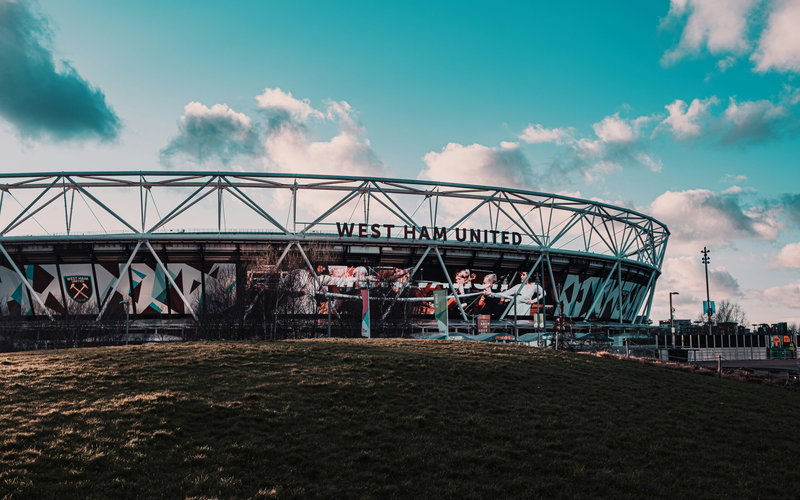
The shift from the Boleyn Ground to London Stadium altered the day of a West Ham game.
The Stratford site is connected to one of London’s largest transport and retail hubs, offering supporters a great selection of pubs, restaurants, shops, and entertainment before and after the games. This helps distribute football fans’ money over a wider geographic area, rather than all of it being spent right next to the stadium.
Also, the study of top-flight football expenditure revealed that, on an average matchday, spending within 1km of football stadiums increases by 5.6% in London. That was an improvement on the 2.8% rise at clubs outside the capital, showing the economic impact that tens of thousands of fans flooding into the same area can create.
The behavior is especially pertinent to West Ham as London Stadium is built for very large crowds. A busy home fixture can thus put a strain on Stratford’s transport, hospitality and retail facilities.
What Do Hammers Fans Say About the Matchday Experience?
It’s not just about spending. Atmosphere and tradition are also important factors for supporters.
In 2015, a survey of 7,775 West Ham fans revealed that 94% didn’t think the atmosphere at London Stadium would be as good as the Boleyn Ground. Over 70% said the current situation was poor or very poor and 61.5% identified that a lack of identity and tradition was one cause of the problem.
The numbers point to something that statistics of pure football fan spending can’t convey. Rituals are just as important as purchases in making a matchday worthwhile: who they travel with, where they have to stand, and how they feel part of the crowd all influence whether they feel they got their money’s worth.
Also, the emotional aspect is crucial as football fans are not just regular consumers. They may go through this process 15 or 20 times a season because the ritual is valuable and associated with the club.
Where Does Sports Betting Fit Into the Matchday?
Another aspect of contemporary football consumption is that of digital activity before and during games. Sports betting in the UK fits within the broader picture of the sports media landscape, alongside fantasy football, team news, statistics and social media and live-score apps – but it’s not for every sports fan’s daily habit.
According to the UK Gambling Commission’s latest industry statistics, remote betting accounted for £2.4 billion of gross gambling yield in 2025/26. The biggest single source of revenue for remote betting was football, which accounted for approximately £1.2 billion.
An independent survey by the Gambling Commission revealed that 10% of adults had wagered in the last 4 weeks in early 2026. This was 16% for men and 4% for women.
These figures can give a sense of why digital betting can be linked to other matchday activities, but should be viewed as part of a wider picture of what a football fan does on matchdays, not necessarily as something every Hammers fan will do.
Does Winning Change How Fans Spend?
Match outcomes can even impact what happens to fans’ wallets after gametime.
It was found that spending by local consumers rose by 5.8% on home Premier League games. The home team’s increase was only 0.1% when the score was a draw or a loss.
A third of 2,000 UK football fans are more likely to spend money when their team wins, according to a follow-up survey in 2026. An average of £17.70 was spent on celebratory drinks for each extra goal, £15.91 on food, and £22.06 on merchandise.
However, this doesn’t necessarily mean that every West Ham goal means another round at the pub, but it does show how feelings can affect football fans’ spending. Football is not a typical sport, as purchasing decisions can shift in a heartbeat based on what is going on in the game.
Are Tickets Still the Biggest Part of the Cost?
While tickets are still the backbone, the overall Premier League statistics make it clear why they cannot be analyzed in isolation.
The Premier League’s official annual report (2024/25) showed average attendance of 40,459 and 98.8% stadium utilization. The average price of a Premier League match ticket was £38.35, and 54% of matches had an average ticket price below that.
Additionally, the ticket price is also a key element in the affordability debate, particularly for West Ham. The club announced a reduction in season ticket renewals for 2026/27, with the adult ticket now being priced at £310, and the Under-18 ticket at £99. The price of adult renewals dropped by 10% to 30% across the bands available.
This can then allow the ticket price to be lower, leaving more funds in the supporter budget for travel, food and other matchday traditions. It also reinforces the point that pricing a product’s affordability based on admission fees alone is only part of the financial story.
Why Is the Full Matchday Worth So Much?
Perhaps the most telling figure is that each Premier League matchday has an average discretionary spend of £138. It demonstrates that football creates an economy that goes beyond the stadium.
The Hammers supporters’ football spending can begin to pour in from trains, buses, pubs, restaurants, shops and merchandise outlets and digital entertainment before the first whistle is blown. This will depend hugely on how far the season-ticket holder is from home and how far the other person is from London.
Also, the ritual is the one thing that doesn’t change. Matchday is all about traveling, socializing, anticipation, the match and all that it entails.
So the figures reflect more than just the spending habits of West Ham fans. They explain why matchgoing football remains such an economic and cultural addiction: fans aren’t buying 90 minutes of entertainment. They are paying for an entire day organized around the club.
Image Source: unsplash.com