


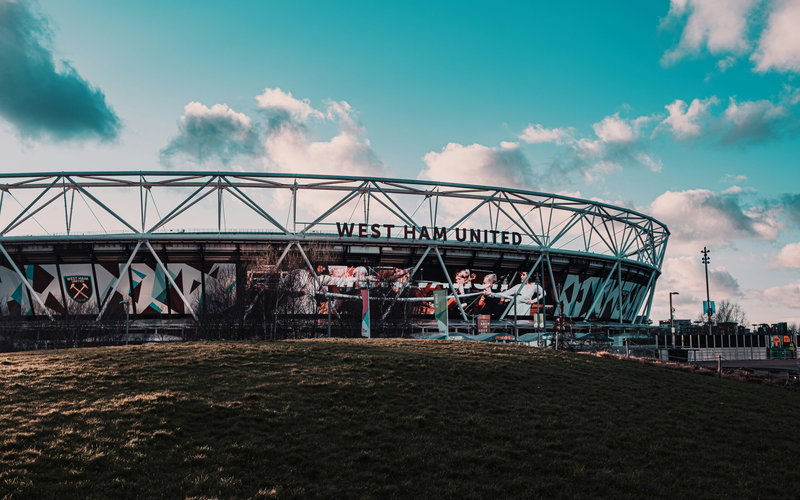
West Ham reached the October international break second in the Championship, giving supporters an early snapshot of a possible promotion challenge.
The Hammers had 15 points from eight matches. They had won four, drawn three and lost once, while their 22 goals were the highest total in the division. Swansea City led the table with 17 points.
Those numbers made pleasant reading. They did not make West Ham promotion certainties.
Anyone familiar with the Championship knows how quickly things can change. A good month can take a team into the automatic-promotion places, while two defeats can drag the same side back towards the middle of the table.
West Ham had made a promising start. That was as far as the opening eight games could sensibly take the argument.
How The Mood Changed
Nuno Espírito Santo looked to be in serious trouble during August.
West Ham drew 2-2 at Burnley after surrendering a two-goal advantage, lost 2-1 at home to Charlton Athletic and then drew 1-1 at Watford. Two points from the opening three league matches was not the start expected from a club targeting an immediate return to the Premier League.
The performances were not particularly convincing either.
West Ham still looked cautious, vulnerable defensively and far too dependent on Jarrod Bowen producing something by himself.
Then came four consecutive league victories.
Wolves were beaten 4-2 at the London Stadium before Derby County lost 3-0 at the same venue. Bowen scored twice as West Ham won 3-2 at Bolton Wanderers, and Wrexham were then swept aside 6-0.
Sixteen goals in four matches changed the conversation around Nuno.
The winning run ended at Millwall, but the 2-2 draw was not a terrible result given the circumstances. West Ham were dreadful in the first half and trailed by two goals before Mohamadou Kanté and Dinos Mavropanos pulled them level.
Kanté’s late red card was frustrating, although the comeback showed that this West Ham team had developed some backbone. As Claret & Hugh observed after the match, the Hammers were beginning to recover points from losing positions.
That was certainly not happening often enough last season.
What Promotion Odds Can Tell Us
That improvement naturally changed the promotion conversation. But a league position and a price answer different questions: the table records points already won, while promotion odds put a price on an outcome still months away. Before treating the latter as evidence of progress, it helps to ask what sits behind the number.
Football prices respond to results, injuries, suspensions, transfers and rival clubs. They also include a bookmaker’s margin. A shorter price can reflect fresh information or a change in the market’s assessment; it is not a measurement of team quality in the way that points or goals are a record of performances. The distinction is clearer when set beside a game whose probabilities can be analysed within specified rules.
Consider blackjack online as a contrasting example: the deck configuration, dealer instructions and permitted actions provide a defined framework for analysing a decision. Even there, a probability does not predict an individual hand. A football promotion forecast has a different problem: it must estimate future performances while squads, fitness and opponents keep changing. For West Ham supporters, that makes the underlying evidence more useful than a price viewed in isolation.
At the eight-game mark, there were still 38 league matches to play. West Ham’s improving results justified optimism, but the size of that remaining sample ruled out treating the early table as a settled promotion order.
An Attack Built For A Promotion Fight
Scoring goals had not been West Ham’s biggest concern.
Bowen looked too good for most Championship defenders and remained the player most likely to decide a tight match. Joel Piroe gave Nuno a recognised centre-forward, while Manor Solomon had the pace and directness to trouble teams from wide areas.
Edvin Austbø also offered another creative option when opponents defend deep.
That attacking depth matters because West Ham will regularly face sides prepared to sit behind the ball at the London Stadium. The Hammers cannot rely solely on counter-attacks when opponents have no intention of leaving space behind their defence.
The early evidence suggested Nuno understood that. West Ham were playing with more attacking intent and committing more players forward.
The Defensive Questions
The 11 goals conceded should prevent anyone from getting carried away.
Burnley, Wolves, Bolton and Millwall each scored twice against West Ham. At The Den, two long throws caused chaos in a first half that Nuno himself admitted contained plenty that needed to improve.
Promotion contenders cannot keep offering opponents those opportunities.
Mavropanos had contributed four league goals, an excellent return for a centre-back, but his primary responsibility remained helping West Ham become harder to score against.
At that stage, defensive improvement looked just as important as sustaining the attacking output.
What To Watch Beyond The Opening Eight Games
The next test was whether West Ham could sustain that attacking output while reducing the defensive errors. A strong promotion case needs both: the ability to break down cautious opponents and the control to protect a lead.
Results against other contenders would offer another useful check. Scoring freely in a short run is encouraging; repeating that level when opponents deny space is a more demanding measure of progress.
The club’s official fixture and results list provides the reference for following that development across the season. Individual games matter most as part of a pattern, especially when judging whether defensive improvement lasts beyond one clean sheet.
For supporters assessing the opening eight games, the question was therefore how much of the improvement could be repeated. Chance creation, goals conceded and the response to setbacks offered more to examine than a shifting promotion price alone.
The early numbers described a promising start, with clear room for improvement at the back.
West Ham had shown enough to be taken seriously as promotion contenders.
Turning that start into promotion would require consistency over the remaining 38 matches.
Image Source: unsplash.com