



With Scott Parker now in the manager’s seat, supporters are naturally asking the same question: what exactly will a Parker team look like?
Last night gave us a glimpse of his ability to deliver a rousing half-time team talk, but what else can he bring to the table besides a penchant for pricey cardigans?
His managerial career has established a clear tactical identity, one that has delivered success in the Championship but has also attracted criticism at higher levels.
A Structured And Pragmatic Approach
Gonzo has already covered this in a previous article, citing that Parker typically favours either a 4-2-3-1 or 4-3-3 formation, built around organisation, possession and defensive discipline.
His teams are usually constructed from the back, with an emphasis on retaining control of the ball rather than engaging in frenetic, end-to-end football. The objective is often to dominate territory through patient build-up play, moving possession into wide areas to stretch opponents before creating openings.
Defensively, Parker’s sides tend to be compact and difficult to break down. A double pivot in midfield frequently provides protection for the back line, allowing his teams to maintain their shape and reduce space between the lines.
The philosophy is clear: control games first, take risks second.
While that approach has often proved effective in the Championship, critics argue it can sometimes become overly cautious, particularly when chasing games or facing stronger opposition.
One aspect of Parker’s CV cannot be ignored: he knows how to get out of the Championship.
He guided Fulham to promotion through the play-offs in 2020 and followed that by leading Bournemouth to automatic promotion in 2022. His ability to organise teams over the course of a demanding Championship season is well established.
For a West Ham side whose only objective is a return to the Premier League, that experience was undoubtedly a major factor behind the club’s decision.
The bigger question is whether he can combine results with the attacking football supporters crave.
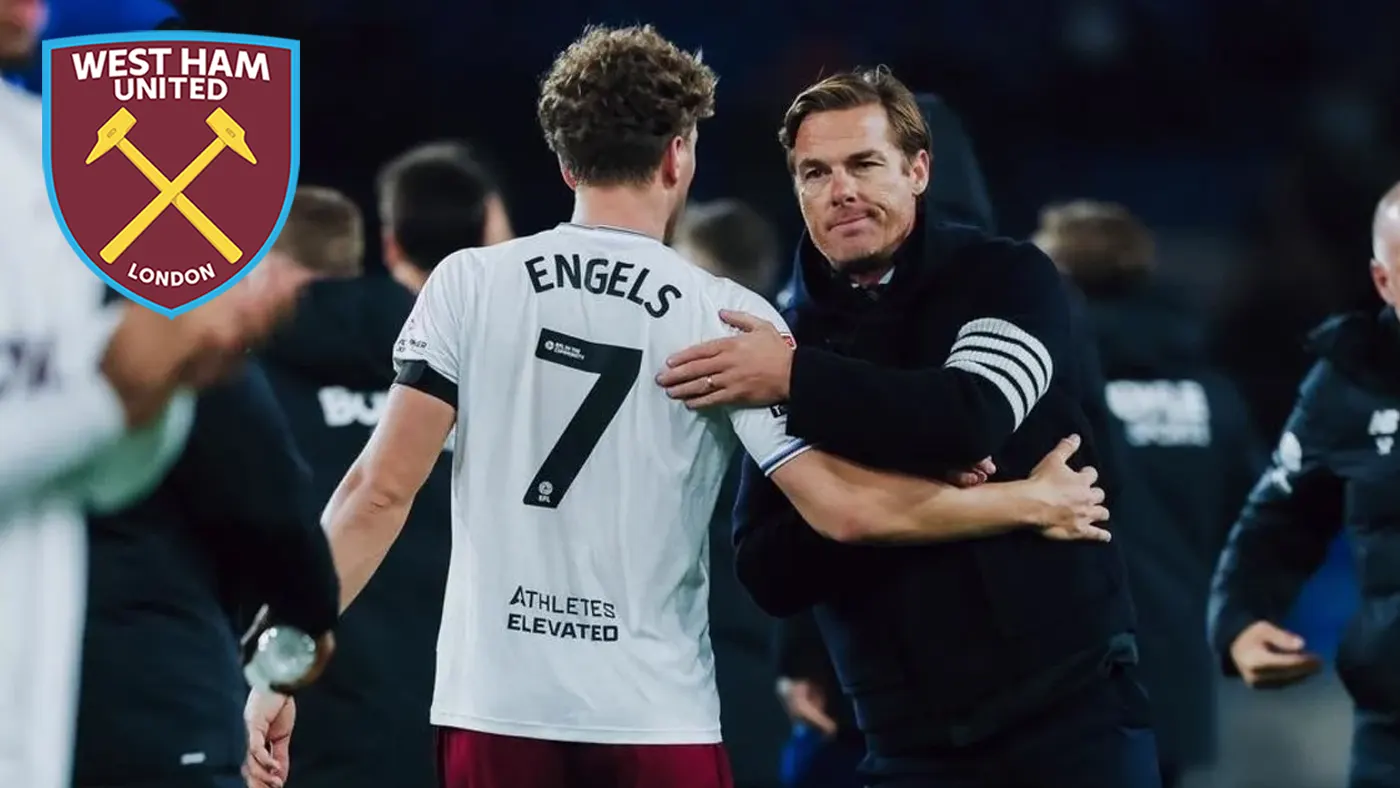
Will Parker get West Ham on the front foot?
What Supporters At Parker’s Previous Clubs Think
At Fulham, supporters generally look back on Parker’s spell with a degree of respect.
Promotion to the Premier League remains a significant achievement, but frustration grew during the following campaign as the football became increasingly conservative. Despite periods of decent organisation, Fulham were ultimately relegated and some supporters felt the team’s cautious approach limited its potential.
With regards to his time at Bournemouth, Parker’s stock was initially high on the south coast after guiding the club back to the Premier League at the first attempt.
However, his relationship with supporters deteriorated rapidly following promotion. Public criticism of the club’s transfer business and squad depth, particularly after a heavy 9-0 defeat at Liverpool, created tensions that cost him his job.
His dismissal divided opinion, especially after Gary O’Neil kept Bournemouth comfortably in the Premier League with largely the same group of players.
Parker’s short tenure in Belgium at Club Brugge proved to be the most difficult period of his managerial career.
Expectations were high upon his arrival, but results and performances failed to follow. His tactical approach was widely criticised and he struggled to adapt quickly enough to the demands of Belgian football.
The experiment was brought to an abrupt end after only a brief spell in charge.
Burnley supporters largely viewed Parker’s appointment through a practical lens.
His track record of Championship promotions offered reassurance, but concerns remained over whether his style could provide the excitement and attacking intent fans wanted to see.
As with many clubs that have employed Parker, appreciation for results was often balanced against questions surrounding entertainment value.
That said, I actually know a Burnley fan, and when Parker was appointed, he messaged me just two words: “Good appointment!”
Scott Parker’s Challenge At West Ham
The challenge facing Parker at West Ham is clear. We arguably possess one of the strongest squads in the division and supporters will expect more than simply grinding out results. Promotion remains the priority, but fans will also want to see an identity return to the team after the uncertainty of the Nuno Espírito Santo era.
One thing is certain: after months of instability, West Ham have turned to a manager with a proven track record at this level.
Now comes the difficult part. Turning potential into winning games!
Now he’s in, let’s unite behind him and see where he can take us. COYI!
Our current goalkeeper has not laid a hand on the last nine goals he has let in. Virtually every corner if he makes a parry out, it is always at 90 degree angle to our goal, so making an assist for the opposition, who have gone on to score from this assist. Ex professional goalkeeper Nuno, could not help this boy change his bad habits, surely Scott has already realised changes start with the goalkeeper
Nice one, Matt.
Scott’s style of play will have to be adapted to utilise to the full the talents of this current squad.
This will be a totally bespoke solution to the formation conundrum. Scott is up to the task in hand. When he had gained promotion with the other three teams, they sold his best players and expected him to work miracles whilst remaining silent about the circumstances.
Considering the rug-pulling, Scott did a great job at each club. With some support to enhance and progress the playing staff available to him he would have been well established as a leading PL manager by now.
I still believe he has the attributes to be that leading PL manager and I hope that will be whilst in the employ of West Ham.
COYI